A grocery shop isn’t one considered purchase. It’s dozens of small things, most of which you bought last week too, picked from a supermarket that stocks tens of thousands of lines. Prices and deals change every week, and most of the shopping still happens in the store, with a cart in one hand and a phone in the other.
The best grocery apps are built around that routine. They can turn a recipe into a full cart, let you scan items as they go in the cart so you never unload onto the checkout belt, or tell you whether your local store has something, and which aisle it’s in, before you set off. The loyalty card lives in the app too, and one scan at the checkout applies your deals.
These 15 do it best, from US favorites like Kroger, Publix and H-E-B to UK and European names like Tesco, Waitrose and Lidl.
1. ALDI


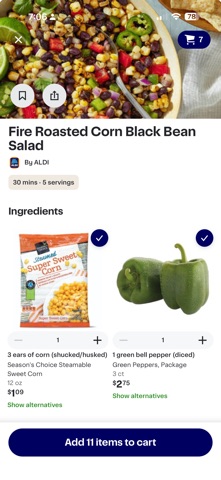

ALDI is a German discount supermarket chain built on a short range of mostly own-brand groceries at low prices. It began when the brothers Karl and Theo Albrecht took over their mother’s small shop in Essen, and the name is a contraction of “Albrecht Diskont.”
The stores are small on purpose, and many everyday items sit on the shelf in the boxes they were shipped in, which saves time restocking.
See next week’s ALDI Finds before they land
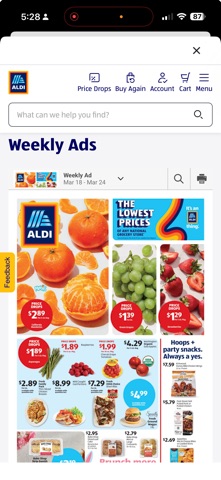
ALDI’s weekly ad lets you see what’s coming before it reaches the store. Alongside this week’s ALDI Savers and ALDI Finds, the app previews next week’s ad.
That matters more at ALDI than at most grocers. ALDI Finds are limited-time products that arrive, sell and disappear, and the shoppers who hear about them early are the ones who get them. A week’s notice is enough to plan a trip around something you want.
It also suits a store with a short range. When there are only a few choices of each everyday item, most of the change from week to week is in the Finds, and the weekly ad is where you spot them.
For the trip itself, you can save products to a shopping list and work through it as you go round your local store. If you order for pickup or delivery instead, a past haul can be reordered with a single tap.
2. Lidl


Lidl is a German discount supermarket chain with stores across Europe and the US, and part of the Schwarz Group, one of the world’s largest retailers. Its roots are in a food wholesaler in Heilbronn, and its first discount store was modeled on Aldi’s.
The name has an unlikely source. Dieter Schwarz bought the rights to it from a retired schoolteacher, Ludwig Lidl.
Scan once at the till for your coupons with Lidl Plus
Lidl Plus lets you carry your coupons, offers and loyalty card in one app and use them all with a single scan at the till. The coupons are personalized, and a set of app-only offers changes every week.
With Lidl Pay set up, that same scan also pays for the shop. One scan of your phone covers both the discounts and the payment.
Lidl Plus doesn’t try to move the shop online. It’s built around the visit to the store, which is how a no-frills discounter is meant to be shopped.
Every shop earns points that you can spend in the Rewards Marketplace, and you can switch to digital receipts. The weekly leaflets are in the app as well.
3. Kroger


Kroger is the largest supermarket operator in the US, running stores under its own name and regional banners including Ralphs, Fred Meyer, King Soopers and Harris Teeter. Bernard Kroger founded it in Cincinnati, where it’s still based.
It was the first grocery chain with its own bakery, and the first with a store surrounded by parking on all four sides.
Scan a recipe to fill your cart with its ingredients
Kroger’s recipe scan lets you point your phone at a recipe and turn it into a cart. The app finds the ingredients and adds them for you, ready for pickup or delivery.
Turning a recipe into a shopping list is the dull part of cooking something new. You read down the ingredients, check the cupboard, and type each one into a search bar. Kroger’s scan does the searching.
It’s a small step, but it’s the one where a lot of meal plans stall.
The savings side of the app is just as busy. Digital coupons are clipped in the app and applied at checkout, with personalized deals and Cash Back offers alongside them. Fuel points are tracked in the app too, and you can redeem them for money off at the pump.
4. Tesco


Tesco is the UK’s largest supermarket chain, selling groceries, household goods and clothing from small Express shops up to superstores. Jack Cohen started it with a stall selling war-surplus groceries at Well Street Market in London’s East End.
The name joins the initials of his tea supplier, T. E. Stockwell, with the first two letters of Cohen. Its Clubcard is among the most established loyalty schemes in British retail.
Check your local store’s stock before you go
Tesco’s Stock Check lets you see whether your local store has something before you leave home. The shopping list goes a step further, showing live stock information from your store next to each item, and it comes with you while you shop.
Because Tesco runs everything from convenience shops to superstores, what’s on the shelf depends on which door you walk through. Knowing in advance saves the trip where the one thing you needed isn’t there.
Clubcard is built in. Your deals and Clubcard Prices sit on the home screen, and one scan of the barcode at the till covers everything. Online orders stay open for changes until the evening before they arrive, and the app supports VoiceOver and larger text sizes.
5. Sainsbury’s

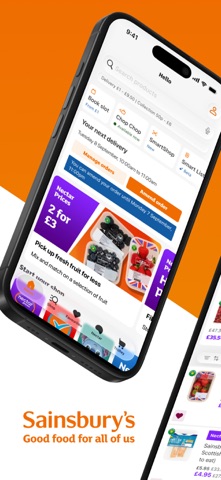


Sainsbury’s is one of the UK’s largest supermarket chains, with supermarkets, convenience stores and online grocery delivery. John James Sainsbury and his wife, Mary Ann, started with a shop on Drury Lane in Covent Garden, under a sign that read “Quality perfect, prices lower.”
It was a founding member of the Nectar loyalty scheme, and it now owns Nectar outright.
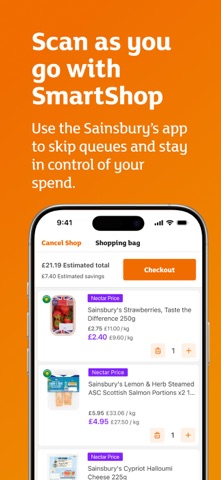
Scan as you shop with SmartShop
Sainsbury’s SmartShop lets you scan each item as it goes into the trolley and keep an eye on what you’re spending. The total builds as you shop, rather than arriving all at once at the till.
On a big weekly shop, that changes the trip. You can see when the trolley has gone past what you meant to spend and put something back while you’re still in the aisle, instead of at the checkout with a queue behind you.
Search Your Store does a related job, showing where a product is in selected stores, which helps when you’re working through a list in a branch you don’t know. Nectar Prices and personalized offers come through the same app.
6. Kaufland


Kaufland is a German hypermarket chain with stores in Germany and across Central and Eastern Europe, from Poland and the Czech Republic to Romania and Bulgaria. It’s Lidl’s sister company in the Schwarz Group, developed by Dieter Schwarz as an alternative to the Lidl discount stores.
It’s still headquartered in Neckarsulm, where the first Kaufland opened.
Build a shared shopping list from recipes and the weekly leaflet
Kaufland’s shopping list lets you build a shop from two places at once. Browse the recipes and add a dish’s ingredients in one tap, or flick through the current leaflets, filter them by category, and add the offers you want the same way.
Then you can share the list with family or friends, so whoever ends up doing the shop works from the same list.
A hypermarket exists for the big, planned household shop, and the planning rarely sits with one person.
In selected stores, K-Scan lets you scan products before they go in the trolley and pay at a self-checkout without unloading anything onto the belt. Kaufland Pay settles the bill with one scan, and the receipt lands in the app. The store finder can even filter for branches with a fish counter, an EV charging point or a petrol station.
7. Ocado


Ocado is a British online-only supermarket with no stores at all, delivering from some of the most automated grocery warehouses in the world. It was set up by three former Goldman Sachs bankers, Jonathan Faiman, Jason Gissing and Tim Steiner.
It also licenses its warehouse technology to other grocers, Kroger among them, and its UK retail business is a joint venture with Marks & Spencer.
Add forgotten items to your order with Quick Add
Ocado’s Quick Add lets you drop a last-minute item into an order you’ve already placed. The order stays open, too: you can change it right up until the night before delivery.
For an online-only grocer, this is the feature that counts. When a supermarket has stores, a forgotten pint of milk means a quick walk down the road. At Ocado, the app is the only place to fix it.
It also matches how a grocery list really comes together, a few items at a time over the days before delivery, as you notice what’s running low.
The range is the other draw. The full M&S food range sits in the same basket as big-name brands and Ocado’s own range, and the Price Promise matches a like-for-like shop against tesco.com, Clubcard prices included.
8. Safeway

Safeway is a US supermarket chain, now part of Albertsons Companies, with its own organic line, O Organics. It grew out of the grocer M. B. Skaggs’s stores, and the name came from its cash-only model: the original slogan was “Drive the Safeway. Buy the Safeway.”
Put your household essentials on a schedule
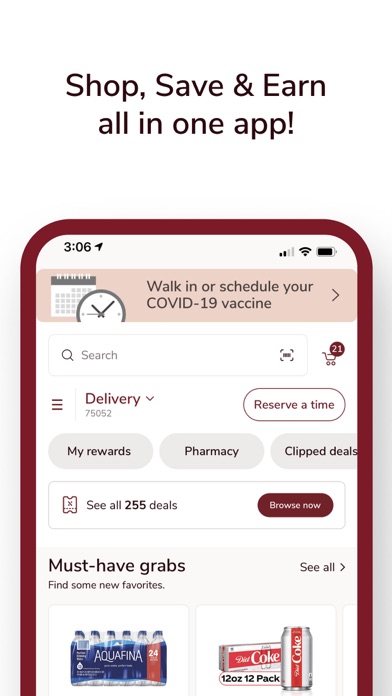
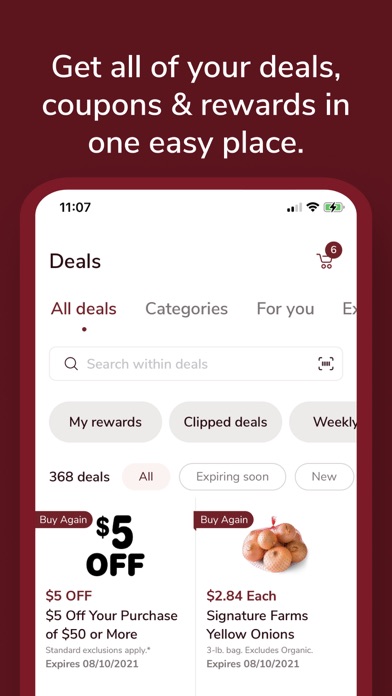
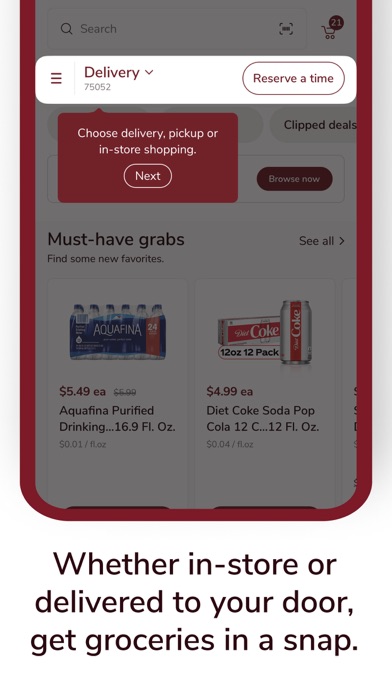
Safeway’s Schedule & Save lets you set household essentials to arrive on a recurring order, with savings on each one.
Some things in a shop run out on a rhythm you could almost set a clock by, like detergent and paper towels. A schedule takes them off the weekly list, so the shopping you do plan can be about the food.
It’s the least glamorous feature on this list, and one of the more useful ones for a busy household.
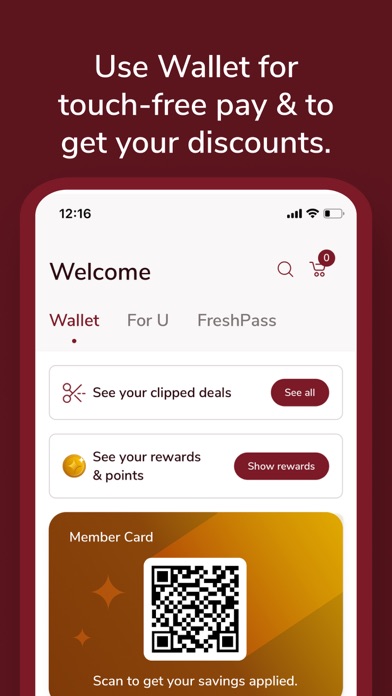
For meals, you can import your favorite recipes into the app and turn their ingredients into a shopping list. Safeway for U rewards are earned and redeemed automatically as you shop, and Points for Fuel can be paid and redeemed in the app.
9. Waitrose


Waitrose is a premium British supermarket chain and part of the John Lewis Partnership, the UK’s largest employee-owned business, where every member of staff is a partner. It was founded in Acton, West London, as Waite, Rose & Taylor, and the name comes from the first two.
It holds a royal warrant to supply groceries, wine and spirits to King Charles III.
Scan, pack and pay as you go with ScanPayGo
Waitrose’s ScanPayGo lets you scan barcodes as you shop, watch a running total, and pack your bags as you go, so checking out at the end is quick. You can write your shopping list on the app’s home screen before you leave the house.
Packing as you go is the part that changes the trip. Your shopping goes from the shelf straight into your bag, and the checkout is a quick finish instead of unloading, scanning and repacking.
That suits how a lot of people shop at Waitrose: for the fresh departments and a few things for dinner, more than for the weekly basics.
The app also remembers what you buy in store. Scan the myWaitrose card in the app at the till and those items join your Favourites, next to what you’ve ordered online. Your trolley syncs between the app and waitrose.com, and the made-to-order Waitrose Entertaining range is there for when you’re feeding a crowd.
10. Publix

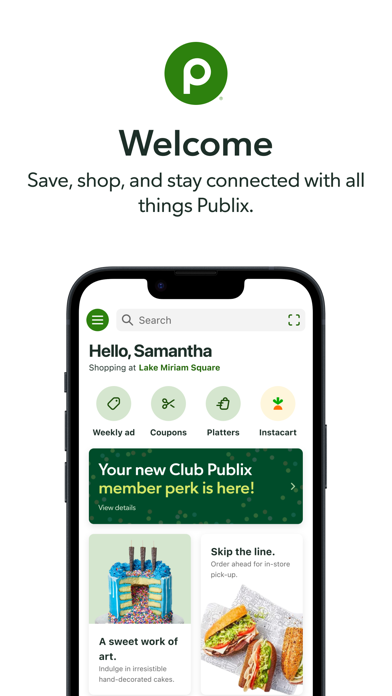


Publix is an employee-owned supermarket chain in the Southeastern US, and it calls itself the country’s largest employee-owned grocer. George Jenkins founded it in Winter Haven, Florida, and its slogan is “Where shopping is a pleasure.”
Its deli subs are popular enough to have their own nickname: Pub subs.
Order a custom deli sub ahead of your visit
Publix’s deli ordering lets you build a custom sub, or order sliced meats and cheeses, and have it ready when you get to the store. The app remembers your usual order, right down to the pickles.
The deli counter is where a quick trip to Publix tends to slow down. Ordering ahead means you skip the wait and pick up a sub made the way you like it.
It’s a good example of an app built around what a brand is loved for. Plenty of grocers sell sandwiches, but few have one famous enough to carry a nickname, and Publix has given it a proper place in the app.
The bakery gets similar treatment, with custom cakes and platters ordered in the app. For the rest of the shop, your lists show aisle locations, and a barcode scanner adds items to the list.
11. H-E-B


H-E-B is a family-owned Texas supermarket chain, known for its own-label food and a large fresh range. Florence Butt started it as a small grocery on the ground floor of her family’s home in Kerrville, and the Butt family still controls it.
It makes its own private-label products and runs its own warehouses, and it puts that network to work in disasters, sending mobile kitchens and water tankers to Texas communities, including during the winter power crisis that hit the state.
Find your way around the store with in-store maps
H-E-B’s in-store maps let you find products quickly once you’re inside. You can plan the week’s meals in a shopping list at home, then use the maps to track down what’s on it.
H-E-B stores carry a sprawling selection of fresh and specialty food, and a map saves a lap of the aisles looking for one item.
The rest of the app is built for the regular shop. Personalized coupons can be redeemed online or in store, your top items can be reordered in a few taps, and you can scan barcodes at home to find a product in the app.
12. Food Lion

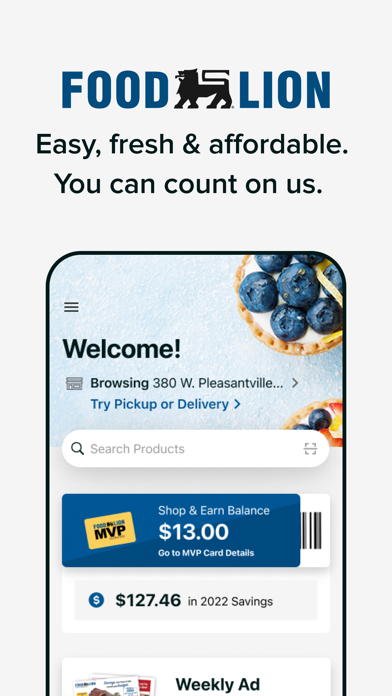
Food Lion is a US supermarket chain in the Southeast and Mid-Atlantic, focused on low prices and owned by Ahold Delhaize. It started out as Food Town, and one of its early slogans, “LFPINC,” stood for “Lowest Food Prices In North Carolina.”
It’s still based in Salisbury, North Carolina, and runs a hunger-relief and community program called Food Lion Feeds.
Spend your rewards on groceries or give them to charity
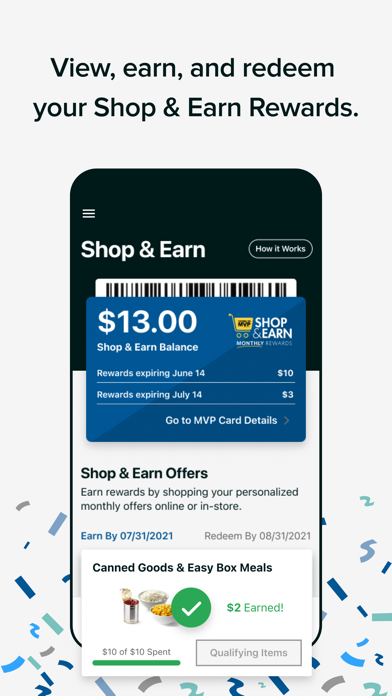
Food Lion’s Shop & Earn Rewards let you decide what your rewards are for. Put them toward your own groceries, or donate them to charity.
It’s a simple option from a grocer that already puts money into feeding its communities, and it lets shoppers do the same with their own rewards.
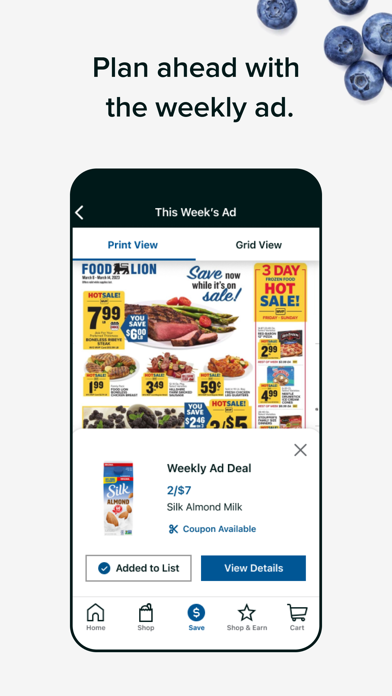
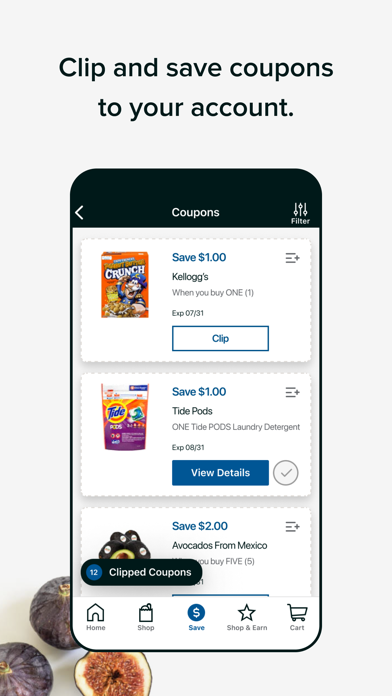
Rewards work the same way in store and online. Your MVP Card can live in your phone’s wallet, ready to scan at the register, and the coupons and weekly-ad deals you clip in the app come off automatically at checkout, in store or online.
13. Albertsons

Albertsons is one of the largest grocery operators in the US, running stores under its own name and banners including Safeway, Vons, Jewel-Osco, Acme and Shaw’s. Joe Albertson opened the first store in downtown Boise, advertising it as “Idaho’s largest and finest food store,” and the company is still based there.
Ask an AI assistant what to cook and what to buy
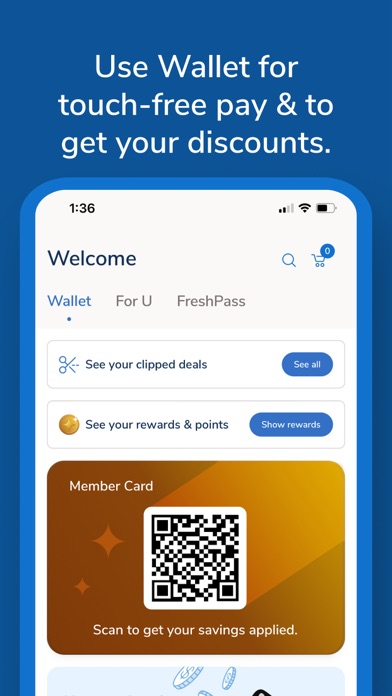
Albertsons’ Ask AI lets you ask grocery questions in everyday language. Type “What can I make with chicken and rice?” or “gluten-free snacks,” and it comes back with recipe ideas or products that fit, then helps you build your list from the answers.
It can also compare products, which helps in a range the size of a supermarket’s, where near-identical items sit side by side.
Search bars assume you know the name of what you want. Ask AI lets you start from a craving, a dietary need, or whatever is already in the fridge.
You can also send a grocery order to someone as a gift, with a personal message, for a friend who can’t get to the store. And you can scan barcodes at home to add the things you’re running low on straight to your cart.
14. Whole Foods Market


Whole Foods Market is a natural and organic supermarket chain, owned by Amazon and known for its strict ingredient standards. It was founded in Austin, Texas, when the SaferWay natural foods store merged with Clarksville Natural Grocery.
It sells only products that meet its own standard for “natural,” which rules out many artificial additives, and its lower-priced own brand is 365 by Whole Foods Market.
Filter your local store by special diets and local brands
Whole Foods Market’s search lets you look through your local store’s products with filters for special diets, local brands, and sales. You can also browse the store’s aisles in the app.
Whole Foods is defined by what goes into its food, and a diet filter goes straight to that. The local brands filter does a different job, picking out the smaller nearby makers a store carries.
At checkout, Prime members scan the app at a staffed lane or self-checkout for extra savings on sale prices. Catering can be ordered for pickup too.
15. Morrisons



Morrisons is a British supermarket chain that makes much of the food it sells. William Morrison started out as an egg and butter merchant in Bradford’s Rawson Market, and the company is still based in Bradford.
It produces more than half of its products in-house, and unlike other UK supermarkets it has its own manufacturing arm, with abattoirs, vegetable packing houses and fish processing plants. In most of its superstores, fresh food comes together in an area called Market Street, with a butcher’s counter, a deli and a cheese counter.
Start from your usual shop with Instant Shop
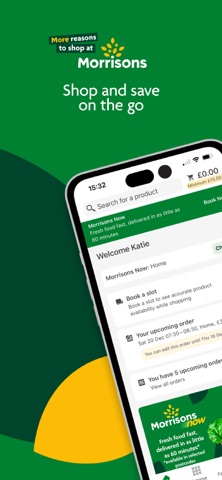
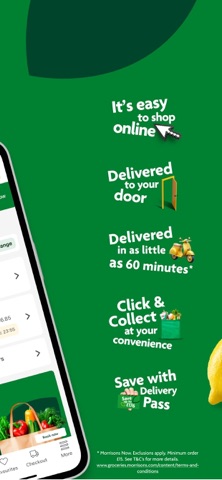
Morrisons’ Instant Shop lets you begin a shop with the trolley already filled. It looks at your previous orders and adds the things you buy most often, and you edit the trolley before you check out.
Much of a weekly shop is the same staples as last week. Instant Shop turns building a basket into editing one, so the milk and bread you’d normally have to remember are already there and your attention goes to what’s different this week.
Favourites fill themselves the same way, with what you’ve bought added after each shop, and you can keep shopping lists for different occasions. Recipes add all their ingredients to the trolley and save the cooking instructions for later. More Card members get More Card Prices and More Point offers in the app each week.
What do the best grocery apps have in common?
The best grocery apps go round the store with you. Sainsbury’s SmartShop, Waitrose’s ScanPayGo and Kaufland’s K-Scan let you scan as you shop, and the loyalty card has become a single scan at the till: Lidl Plus, Tesco’s Clubcard, Food Lion’s MVP Card and Whole Foods’ Prime deals all apply your savings at once. At Lidl and Kaufland, the same scan can pay as well.
They also start earlier, at the point of deciding what to eat. Kroger scans a recipe into a cart, Albertsons answers questions about what to cook, and Kaufland, Safeway and Morrisons turn recipes into a list or a full trolley. In grocery, the meal usually comes before the shopping, and these apps are built in that order.
And they know the routine. Tesco checks your local store’s stock, while Sainsbury’s, Publix and H-E-B show you where things are. ALDI, Morrisons, Safeway and Ocado make it easy to repeat, schedule or top up the shop you do every week, because most of what goes in a grocery cart has been there before.
Final thoughts
Grocery shopping is a habit more than a purchase, and the apps people open every week are the ones that make the habit easier. Publix puts its famous deli counter on your phone, ALDI shows its Finds a week early, Ocado gives a business with no stores a way to fix a forgotten item, and Tesco ties the whole app to the Clubcard at the till.
Each of those starts from something shoppers already like about the store. For a grocer weighing up an app, that’s where the best ones began.